financial evaluation of pathways ccs incentives
optimizing carbon capture economics through policy design
05-Aug-25
Executive Summary
This analysis reveals critical insights about CCS incentive design through detailed financial modeling:
Important
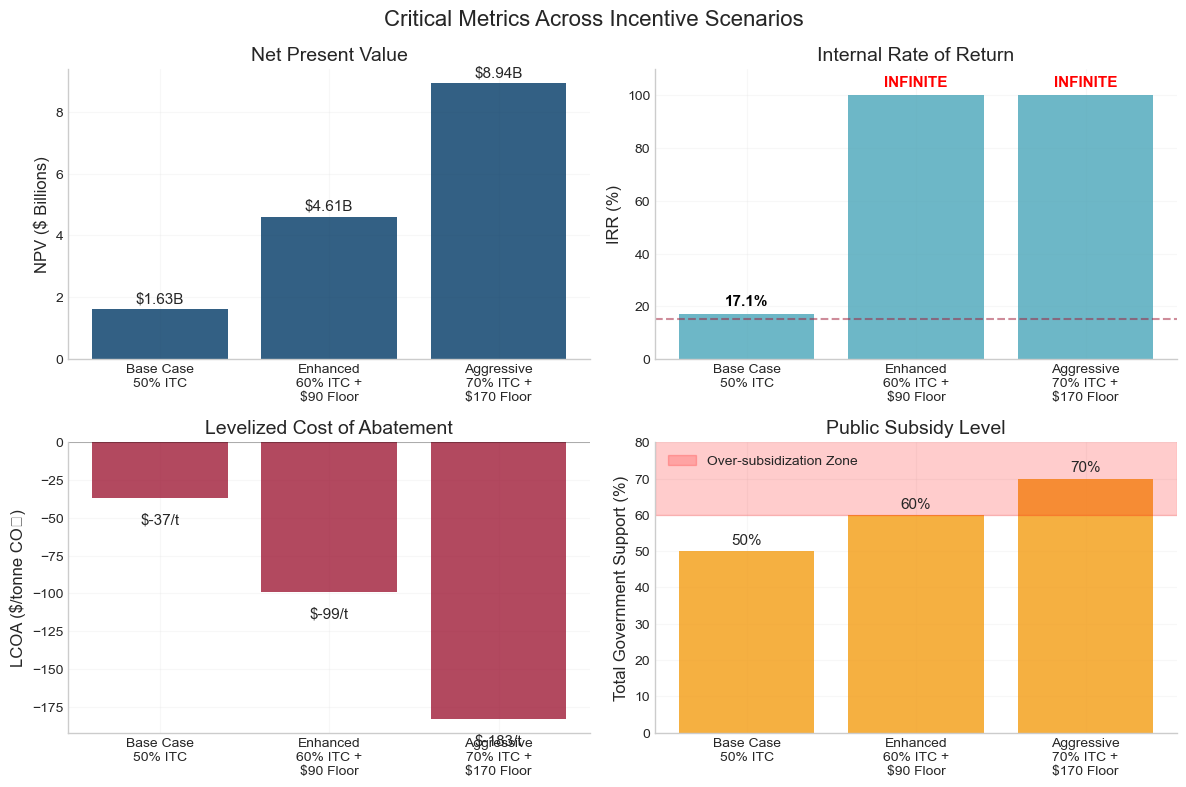
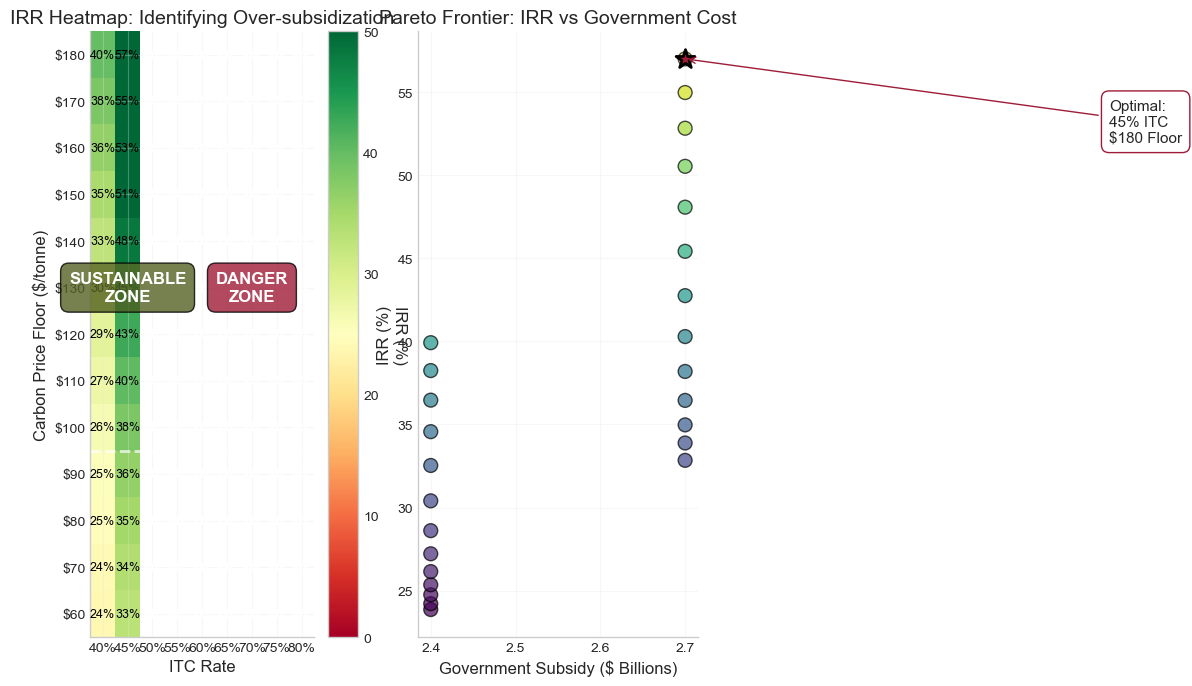
Key Finding: While a 50% Investment Tax Credit yields sustainable 17% returns, combining high ITC rates with price floor guarantees creates infinite IRRs, signaling dangerous over-subsidization that would transfer excessive value from taxpayers to producers.
Introduction
Carbon capture and storage (CCS) represents a critical technology for decarbonizing Canada’s oil sands. However, designing incentives that balance producer viability with public value presents complex challenges. This analysis uses detailed financial modeling to identify optimal policy structures.
Model Framework
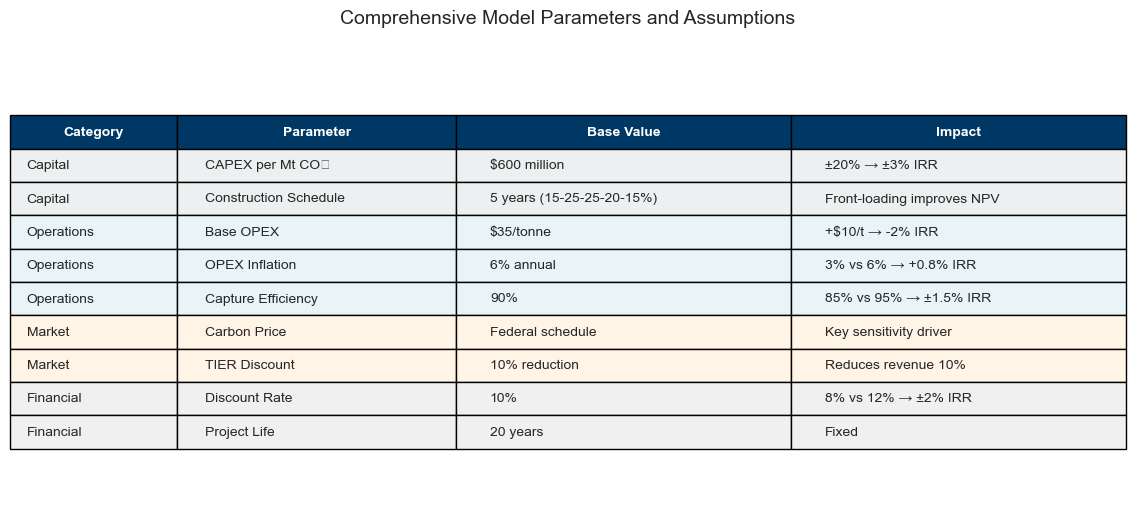
Model Parameters and Assumptions
Scenario Analysis
Granular Scenario Definitions
Cash Flow Analysis
Carbon Price Sensitivity Analysis
Optimization Analysis
Policy Implications
=== Scenario Analysis Results ===
                Scenario    NPV IRR(%)    LCOA  Capex_Coverage(%)  CfD_Floor
   Base_50pctITC_NoFloor $1.63B  17.1%  $-37/t              50.00       0.00
        60pctITC_90Floor $4.61B   nan%  $-99/t              60.00      90.00
70pctITC_170Floor_Opex10 $8.94B   nan% $-183/t              70.00     170.00

=== Policy Recommendation ===

Recommended Scenario: Base_50pctITC_NoFloor
  - ITC Rate: 50.0%
  - Price Floor: $0.0/tonne
  - Expected IRR: 17.1%
  - NPV: $1.63 billion

⚠️  WARNING: The following scenarios yield infinite returns:
  - 60pctITC_90Floor: 60.0% ITC + $90.0 floor
  - 70pctITC_170Floor_Opex10: 70.0% ITC + $170.0 floor
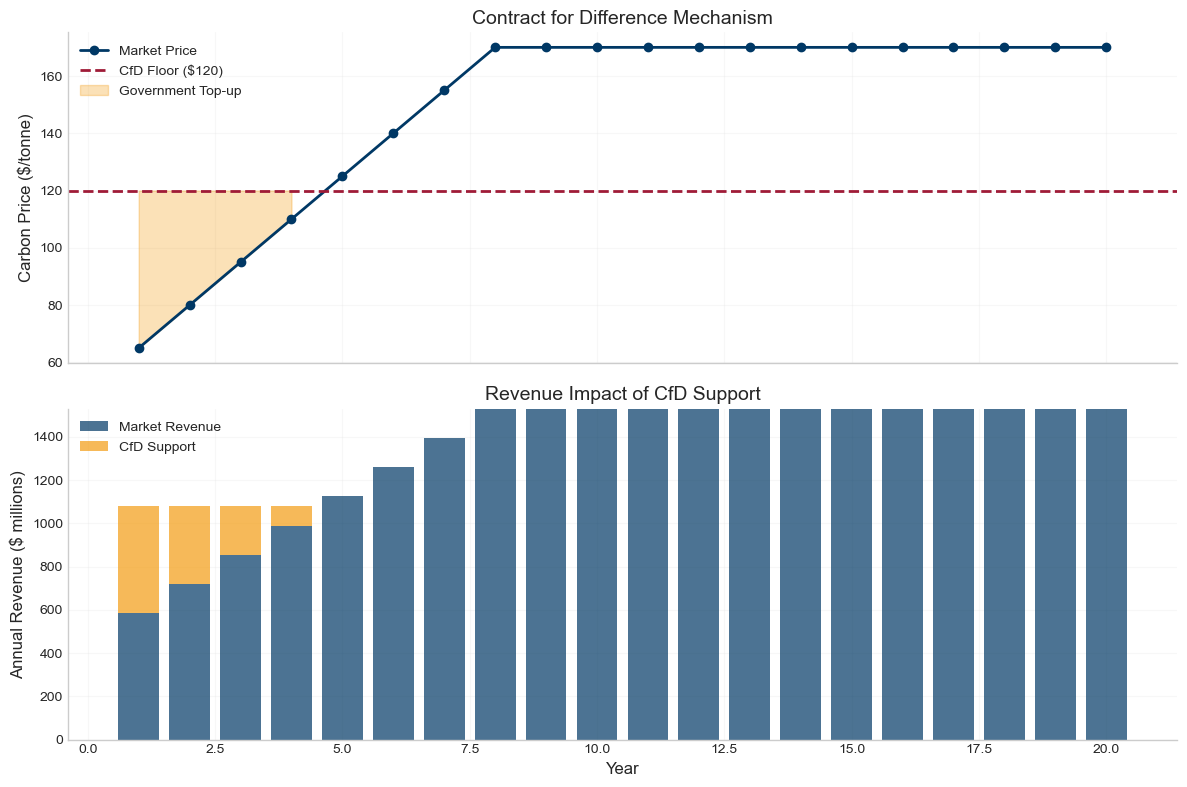
Understanding the CfD Mechanism
Conclusions and Recommendations
Based on the modeling above with realistic operational parameters:
NoteOptimal Policy Design
- ITC at 50%: Provides sufficient support without distorting markets
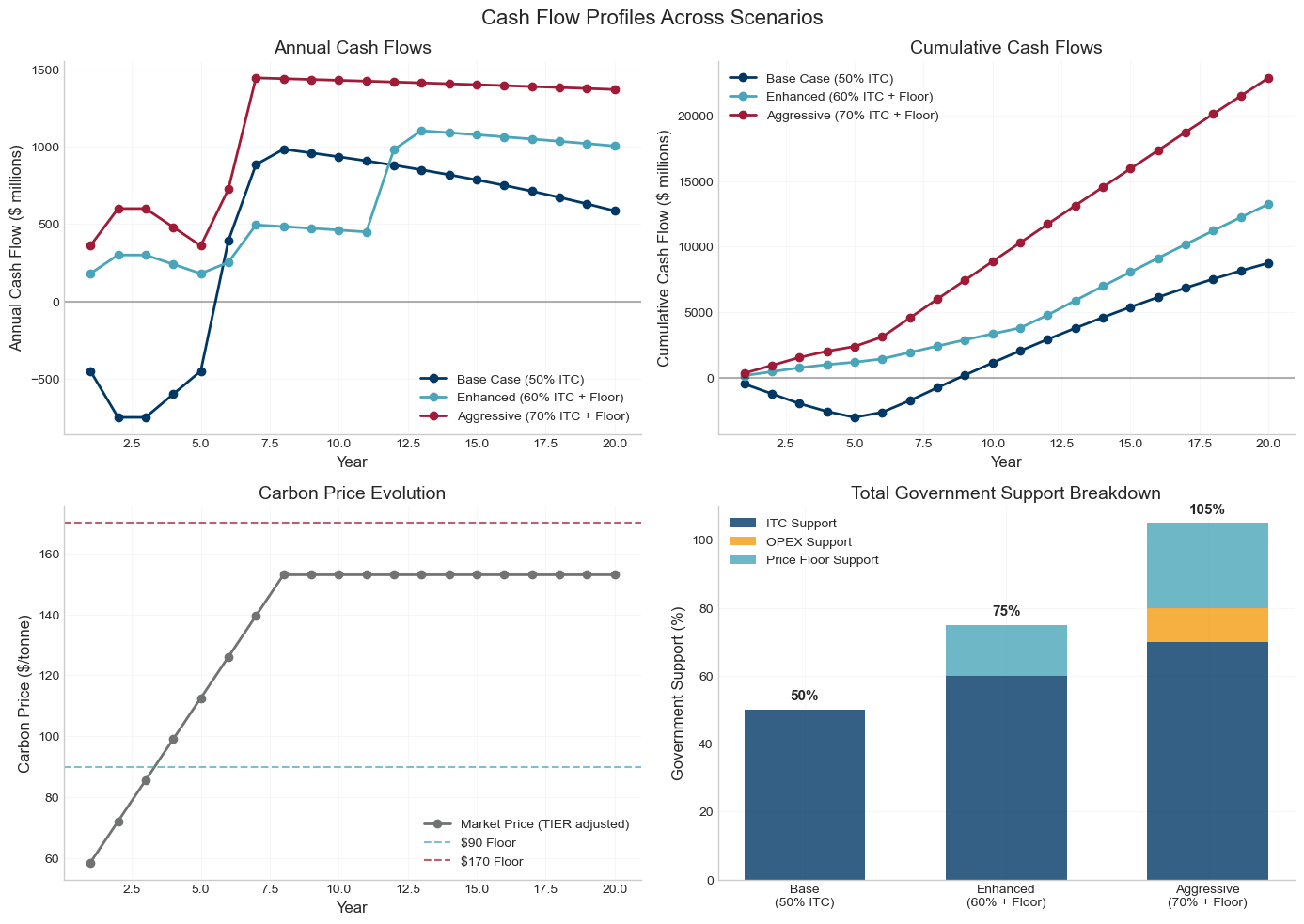
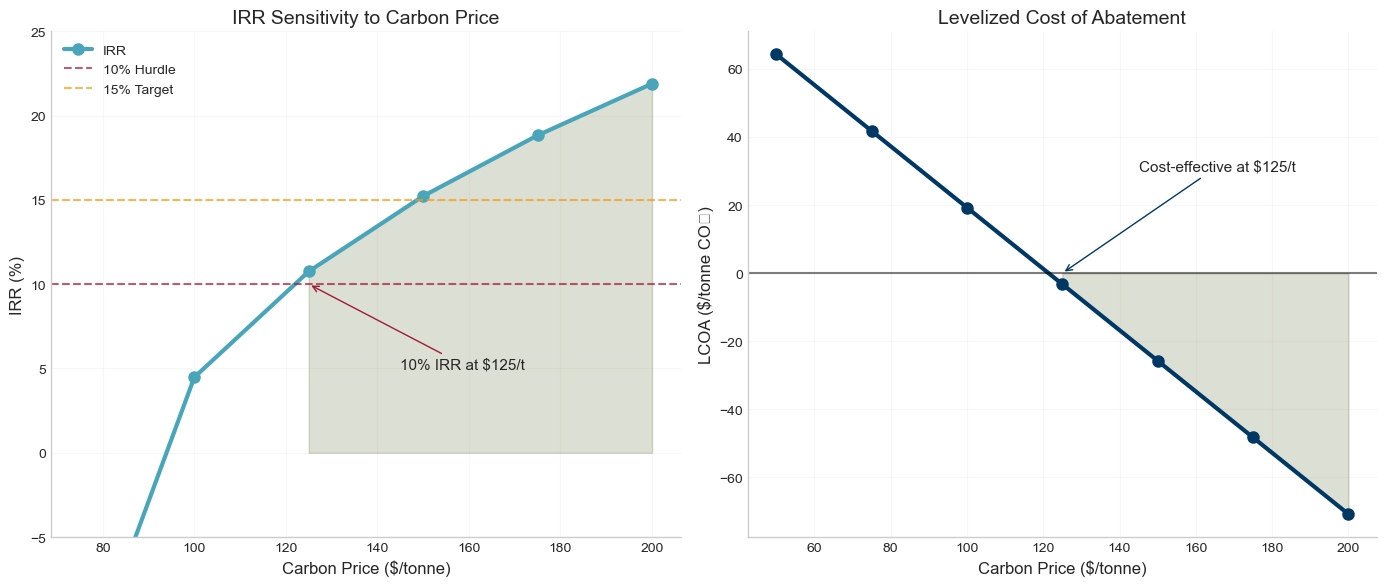
- No price floor: Unnecessary given carbon price trajectory to $170/tonne
- Focus on execution: Regulatory streamlining more valuable than additional subsidies
WarningCritical Finding on Over-subsidization
The combination of high ITC rates (≥60%) with price floor guarantees creates infinite IRRs because the government effectively eliminates all project risk while guaranteeing profits. This represents poor value for taxpayers and could undermine public support for climate policy.
Key Insights
Operational realities matter: Including TIER discounts, capture efficiency, and OPEX inflation significantly impacts project economics
CfD design is critical: The repayment mechanism prevents windfall profits but must be carefully calibrated
Carbon price trajectory sufficient: The path to $170/tonne by 2030 provides adequate revenue without additional guarantees
Transparency essential: Clear modeling of all subsidies helps maintain public trust
Analysis demonstrates the importance of detailed financial modeling in climate policy design. Balancing ambition with fiscal responsibility requires understanding complex incentive interactions.